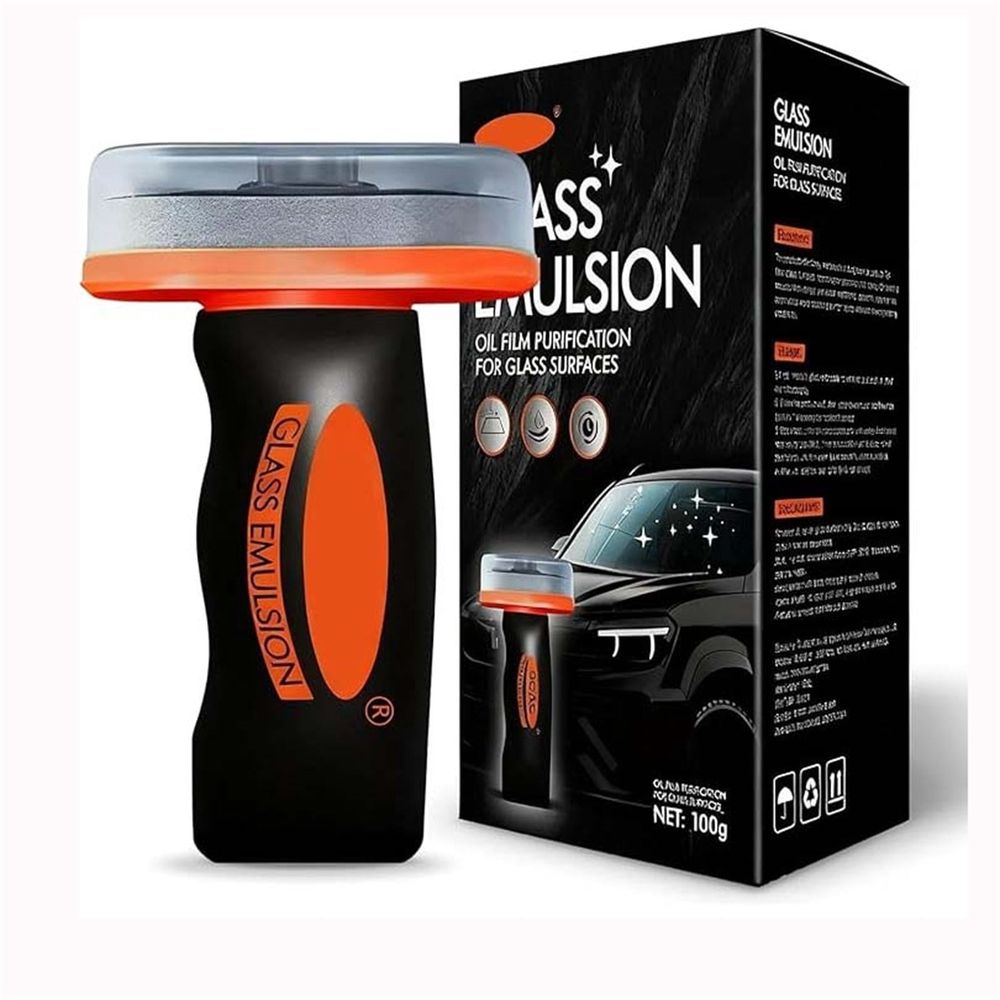
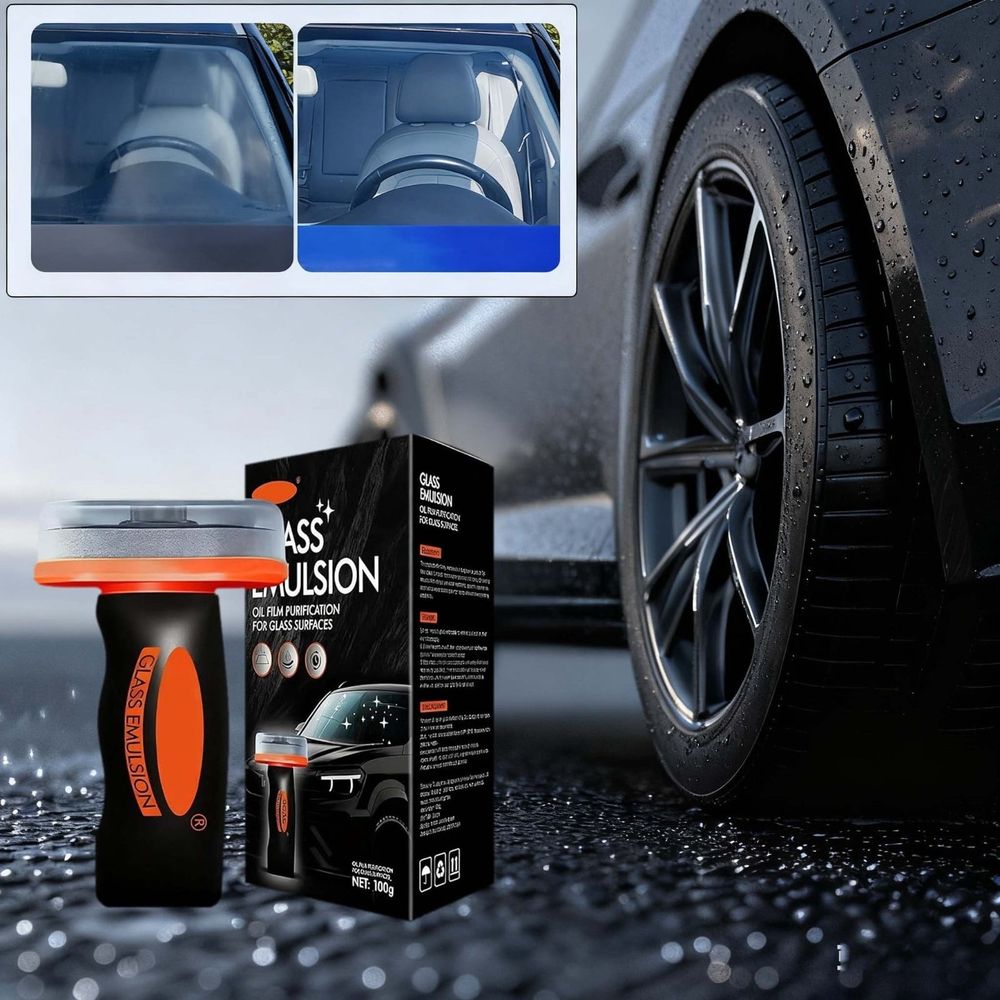
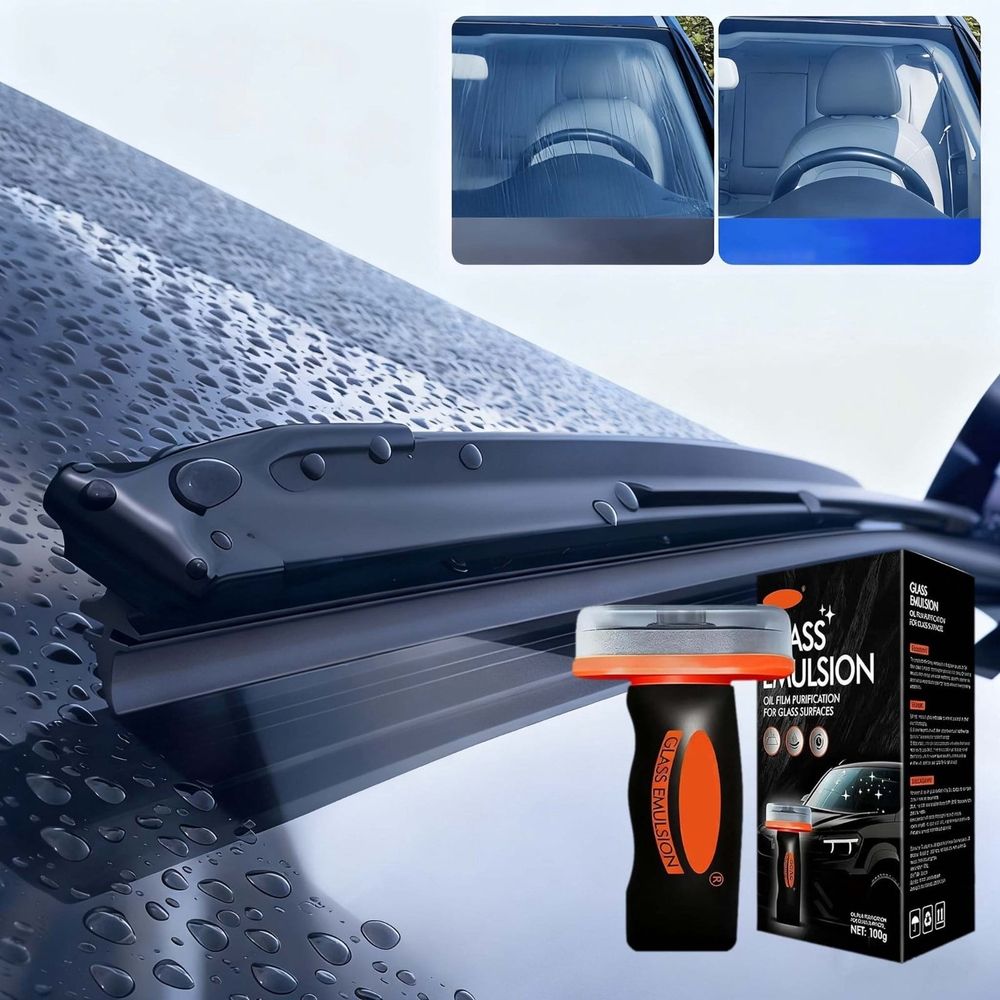
The Hazy Film You See at Night – That’s Oil Film After a few months, a thin layer of petroleum-based residue builds up on your windshield. It comes from other cars’ exhaust, fumes, and road grime. You notice it when driving at night into oncoming headlights – a blinding effect, or in rain when wipers leave a smear. The glass emulsion car glass oil film removal cleaner cuts through that layer chemically. Why Regular Glass Cleaner Fails Standard window cleaner sprays are designed for dust and fingerprints. They don’t have the solvency to break down polymerized oil. You need a dedicated oil film remover with a thick, paste-like consistency that can dwell on the glass. How to Use (Polish by Hand or Machine) For hand application ( common): Clean the windshield with regular glass cleaner first to remove loose dirt. Apply a small amount (quarter-sized) of windshield oil remover to a damp foam applicator or microfiber pad. Rub onto the glass in circular motions with moderate pressure. Work in 2×2 foot sections. Let the product dry to a (about 1-2 minutes). Buff off with a clean, dry microfiber towel. For machine use (if you have a polisher): Use a soft foam polishing pad at 3-4. Work slowly. Wipe off residue immediately. The Test – How to Know if It Worked After polishing, spray water on the windshield. If it sheets evenly and wipers leave no streaks, the oil film is gone. If water still beads in patches, repeat the process. Also Works on Side Windows and Rear Glass Don’t limit this car glass polishing tool to the front windshield. Use it on: Driver and passenger side windows – eliminates the that reduces visibility. Rear window – improves rearview mirror clarity. Sunroof – removes water spots and etching. Headlight lenses (plastic) – works as a mild polish for light oxidation. Pro Tips for Results Do it on a cool windshield – Direct sunlight will make the product dry too fast. Use a dual-action polisher – If you own one, it s up the process and delivers a more uniform finish. Clean wiper blades – After removing oil film, clean your wiper blades with to prevent re-contamination. Apply a hydrophobic coating afterward – For even better rain performance, top with a glass sealant. How Often to Do This Every 6-12 months, depending on your driving conditions. High-mileage highway drivers will see film build up faster. If you notice wipers chattering or streaking even with blades, it’s time for this treatment. Economical 100g Jar One jar treats 4-5 wind (or one windshield 4-5 times). Keep it in your detailing cabinet. Drive Safer with Clear Glass This automotive glass cleaner is not about cosmetics – it’s about safety. Clear, oil-free glass means better time and less eye fatigue.
Removes Stubborn Oil Film from Wind: This glass emulsion car glass oil film removal cleaner is specially formulated to eliminate the greasy, hazy layer that builds up on wind from traffic fumes and vehicle exhaust. It’s a windshield oil remover that restores clarity. Ergonomic Handle for Easy Application: The bottle design allows you to apply the paste directly to a foam pad or cloth. You can every corner of your windshield without strain. This car glass polishing tool is user-friendly for all. 100g Large Capacity – Multiple Uses: One jar provides enough product for several deep cleaning sessions or for treating multiple vehicles. This glass stain eraser offers great value for households with more than one car. Restores Clarity and Enhances Driving Safety: Removing oil film eliminates the streaky, rainbow effect you see when driving into the sun, especially in rain. Your windshield purifier improves visibility day and night. Ideal for Car Enthusiasts and Daily Drivers: Whether you’re a weekend detailer or just want a safer commute, this automotive glass cleaner delivers professional-grade results without expensive equipment.
Delivery & returns: ships from Australian warehouses, usually within 5–12 business days. A few very remote postcodes can’t be reached by our couriers — if yours is one, we’ll contact you before dispatch. Faulty or damaged items are covered under the Australian Consumer Law.